Quake City
Our Story

Sometimes a story sits in your chest for years before it decides to be told. Today’s the day. I’m lying under my favourite tree, listening to the city breathe beneath me, and something in the earth, in the memory, finally said, tell it now.
So here it is.
Christchurch, earthquakes, marriage endings, life’s rebuilding, the land that broke me open and carried me anyway, and maybe, beneath it all, it’s an invitation for you to tell me about your land, where you are.

THE CITY THAT BREATHES UNDER ME
I’m lying on the grass under my favourite tree, the kind of afternoon where the sky forgets to hurry you and the earth feels like it’s inhaling and exhaling slowly and deeply beneath me. When I get this still, Christchurch begins to speak to me in that hushed, geological voice you only hear when your ear is pressed to the ground, like it is right now.
I’m thinking about the layers beneath my body, the old volcanic bones of Lyttelton Harbour, a now-collapsed crater that the ocean slipped into, as if it had been waiting for an invitation. There are literally centuries of settlement and story here, on this land, the fault-lines stitched into the city underneath me, like our two hearts are beating together.
I’ve written a bit about Central Otago, the orchard, and my childhood in other writings. That landscape taught me silence and rebellion in equal measure. Still, I’ve never really written about Christchurch, not in the way I want to now, which is less about the biography and as much about standing barefoot on the earth of a place asking, What have we survived together?
What are you still trying to survive?
I came here when I was ten, and although I have left a couple of times, wandered off for a year or two, like I was testing the edges of a tether, I always come back here, back on this broken and healing city.
I’ve spent my adult life here, birthed my children here, and my grandchildren were born here, too. My heartbreaks were lived here, my rebuilds and healing were all here, and, of course, we experienced the earthquakes of 2010, 2011, 2012... thousands upon thousands of shakes, some slight enough to be mistaken for a passing truck, some violent enough to change the architecture of land and its memories.
It’s bizarre, living in a place that has literally rearranged itself beneath your feet. You learn to listen differently and also to walk differently. I will tell you all about that later in this writing.
THE FIRST LAND UNDER OUR FEET
But to go back a bit, I have to explain that this land is Ngāi Tahu land, earth shaped long before any of us Pākehā turned up with our treaties and our tidy maps. Māori have been here for maybe seven hundred years; before them, there were just birds. We don't have snakes, poisonous spiders, or any big cats or reptiles. The Maori were navigators from the wider Polynesian areas in the Atlantic; they read stars the way we scroll screens. When they arrived, they folded their stories into the sun, the wind, the coastlines, and the volcanic stillness of this place.
Like everywhere else at that time, the English colonisers rolled in, made agreements, made mistakes, made claims, and then they made their homes amongst the local tribes. I’m here too now. My great-grandparents took a weeks-long ship trip, which brought many Europeans to New Zealand for many years. My blood is half-Irish, half-Scottish through my father’s Central Otago roots (from further south of here), my mother’s Scottish-Australian blood, and the restless inheritance that pushed me from the orchard into this city of fractures and rebuilding.
Maybe I’m writing this because I thought you might enjoy the read, but I also really want to know where you live. All seven hundred of you that may be following along, you're scattered across the world like seeds that I can’t see, but still feel connected to you all somehow. I want to hear what rests beneath your cities and your cities or small towns, what your histories sound like when you press your ear to the ground.
THE DREAM THAT WARNED ME
So I should probably say this upfront that the first time the ground moved, it didn’t happen under my feet at all. It happened in a dream. Three nights before the first quake, I flew upright in bed, yelling“earthquake!” into the dark like someone had pushed an alarm inside my chest. My husband blinked at me, in shock. I remember him mumbling, That’s weird… and then we rolled back into sleep, neither of us knowing what was coming.
THE NIGHT THE CITY SPLIT OPEN
Three mornings later, at 4 am, the whole house reared up like something underwater. We felt we were on the wildest boat ride for about 60 seconds. (it felt like eternity) A deep, ripping roar, 7-point-something nightmare that felt like it split the skin of the city. When sunlight came, we walked around the neighbourhood, and my fifteen-year-old son could actually stand inside the rips in the earth. Whole roads warped, the footpaths tilted like broken teeth. Near the rivers, the land had just given up. I could feel that their childhoods had changed shape forever. No more biking to school, skateboarding or scooters, and no more free-range wandering, the air had a different weight to it.
My youngest was five then, and she carried the anxiety on her tiny shoulders in a way that still hurts her to remember. School, once safe, became another unpredictable fault line, as every shake meant evacuations, reassessments, and structural checks. The kids learned to wait for the word ‘clear’ before they were allowed back into their classrooms.
THE AFTERNOON EVERYTHING FLOODED
Then just six months later, we took another big hit, this time in mid-afternoon, the kind of quake that floods streets, collapses driveways, and turns dust into silt volcanoes bubbling up through the ground everywhere. That day, we had to rescue the children on foot, wade through water up to our knees, park our cars 20 minutes from school, and even step over downed power lines.
The days that followed people spent pulling cars out of giant holes in the roads, and everyone had to pretty much wheelbarrow the city out of itself, university students from all over New Zealand, neighbours and strangers all in gloves, boots, and adrenaline. Tonnes upon tonnes of silt were removed.
THE PREGNANCY HELD TOGETHER BY HOPE
Between the first and second earthquake, I fell pregnant again, so I was 22 weeks along when the second big 7.4 earthquake hit. The exhaustion and the stress tipped me into pre-term labour that day. We had to get out of Christchurch if this baby was going to live, so we left Christchurch and ended up in the next closest town (with a hospital), Timaru, where I spent a couple of weeks getting the contractions settled wth medication. We lived in a holiday park in a tiny town called Tamuka. We stayed away from Christchurch for 4 months, until my body calmed down and grew the rest of my baby boy, but, as Christchurch always did, it called me home, and exactly two weeks after being back, another 5.5 quake hit.
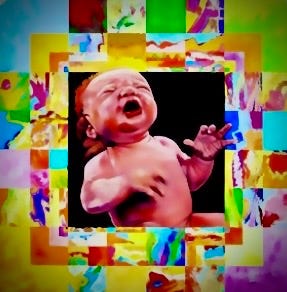
My kids had to stay home from school again because of the latest 5.5 quake and were waiting for the all-clear for them to return. That day, my waters broke, I was 36.5 weeks pregnant, not one contraction came in 12 hours, just a body that said now, and a city that shook as if in agreement. So twelve hours later, I had an emergency C-section. During the C-section, another five earthquakes rocked the whole hospital. Utterly miraculously, my last child was born, a little early, small but healthy. He’s almost fifteen now.
THE YEARS THAT BROKE US OPEN
These years… they changed everything. The kids came through it but were now dealing with anxiety disorders, as did half the children of the region. Therapists flooded into the city for years, and we took the help where we could get it, because we needed it. My marriage unfortunately didn’t survive the trauma; it ruptured too, splitting open silent fractures that were already there, and I won’t write those details in this piece because that’s for another time. But it was hard, oh God, it was so damn hard. It was exhausting and was one of the darkest, stretched-out times of my life.
Over the next 5 years, we went from a big, new house with five bedrooms to council housing with 2.5 bedrooms. So this was our “normal” now, and I had to start over from scratch. I remember there were nights.. I can still see the carpet, where I lay face down on the lounge room floor, crying my lungs out, thinking, What’s the point? Why am I even here? I'm nothing, I'm nobody, I don't know who I am! That was the bottom, but it was also the beginning. A kind of slow, messy awakening started unfolding, that eventually led me back to writing again, back to the earth, back to some version of spirituality that didn’t require performance or pretence, just gentle movement, breath, sky, a total rebirth. That's also a whole other story.
THE NEW FAMILY WE BUILT FROM THE RUBBLE
Somehow, over the past eleven years, things have softened. I don’t know where the years have gone, but the kids have grown up. We’ve all grown closer and built something steady, tender, sometimes loud, always loving. My life is more whole again now. My son came back home a few years ago, and he built a cabin for himself on my small property, but soon after, his children came home to us, too. He is parenting his three girls on his own now, very brave, tired, but so devoted, and I'm so proud of them all..
I’ve now moved into the cabin out back so he and the kids can have the house to live in as a family. It’s been two and a half years in my wee cabin now; it's been an adjustment, but we've found a balance. My grandkids are 11, 8, and 6 years old. When I go inside, my grandchildren greet me like I’m a celebrity, like a warm blanket at the same time. “Grandma!” they shout when I walk in the door. I get so much extra love and hugs nowadays. Sometimes, they come and hang out with me in my little cabin, too and tell me their woes. We do art together and talk about their little lives. My older two children, who live together about 20km away from us, come over on quiet nights, when the grandkids go to their mums. We eat dinner together once a week, just me and my four children. Two of them are amazing artists. We talk about art and share whatever new creative thing they’ve found online and whatever project they are interested in. There’s a kind of gentle rhythm to our lives now that I never thought possible in those broken years.
THE CITY THAT RUPTURED US, THE CITY THAT HELD US
Christchurch is the place that literally unravelled us, ruptured us emotionally, but it’s also the place where we have rebuilt, and where my children have healed. Where I became my authentic true self. Where I learned that devastation and renewal sometimes share the same fault line, and maybe that’s why I love this land the way I do, because we survived it together. When I lift my head from the grass and look around, Christchurch feels like a city learning to breathe again, a place that’s had to reinvent its own bones one careful, stubborn year at a time.
It’s the biggest city in the South Island, though “biggest” is such a funny word when you can drive five hours in almost any direction and hit the edges of the island like you’re tracing the outline of a giant body. I'm on the eastern coastline, a long sweep of Pacific Ocean that looks gentle until the easterly winds come in from Antarctica. We get some sound surfing waves too. This place is constantly reminding me, in one way or another, that it doesn’t radiate warmth on command, four seasons in one day. But you can swim here, and we do, because Cantabrians are a bit mad like that.
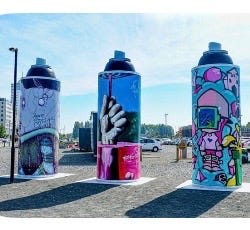
THE LAND THAT SHAPED US
If you drive half an hour north of the city, you hit a river that cuts its way all the way west like a silver arrow. Drive thirty minutes south in the opposite direction, and you'll come to another river, doing the same long run toward the mountains. That’s the thing about Christchurch: the flatness fools you, the whole of Canterbury is like a great plain, flat and smooth; it’s held inside a bowl of mountains that sit around the edges like quiet guardians. Arthur’s Pass cuts straight through that spine, and if you drive over it and keep going west for a few hours, you pop out at the Atlantic Ocean, a beautiful coastline where everything is greener and wetter. The island itself is roughly “five hours by three hours by five hours by three hours” if you were to do a complete loop. Hope that makes sense.. It’s beautifully scenic, and the landscape changes every 30 minutes. There’s something new around every bend of the island, but this is just how it feels to live on a chunk of land that’s both small and enormous in all the right ways.
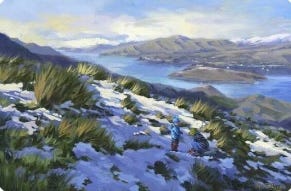
We’re different down here compared to the North Island. We are less crowded, less frantic, a little more weather-beaten in temperament. Christchurch is the anchor city, and then Dunedin, four hours further south, is like a cousin who learned medicine and poetry at the same time. And in the centre of this inland is the most enormous mountain in the Southern hemisphere, Aoraki / Mount Cook, towering over lakes so turquoise blue green that they look Photoshopped even when you’re standing right there breathing the cold off the water.
The seasons don’t rush either; winters can drop below zero, and summers might hit 30 degrees Celsius if they’re feeling enthusiastic. Right now, it’s summertime, 27 degrees today, which means while the northern hemisphere is pulling out their coats and scraping frost off windows, I’m down here sweating in my backyard, getting sunburnt in December, pretending Christmas lights make any sense at all in full daylight.
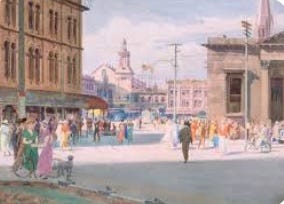
THE FAMILY THAT STAYED
Most of my large family doesn’t live in this South Island anymore; they're scattered the way families do, to Australia, America, wherever life tugged them. We have a mix of ethnicities in my family too, mainly English, Irish, and Scottish, but also Māori, Samoan, Chinese, Italian, and American Indian threads woven through the wider family, sixty-odd cousins ricocheting across the map. Christchurch is just home to me, my four kids, three grandbabies, my sister, her husband and daughter, so just a handful of people holding the family fort on this land that has carried us through so many versions of ourselves. Sometimes it feels like we’re the stubborn ones who stayed. Sometimes it feels like the land asked us to.
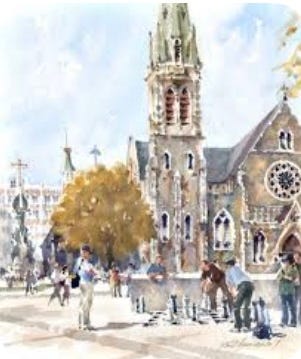
THE CITY THAT REBUILT ITSELF
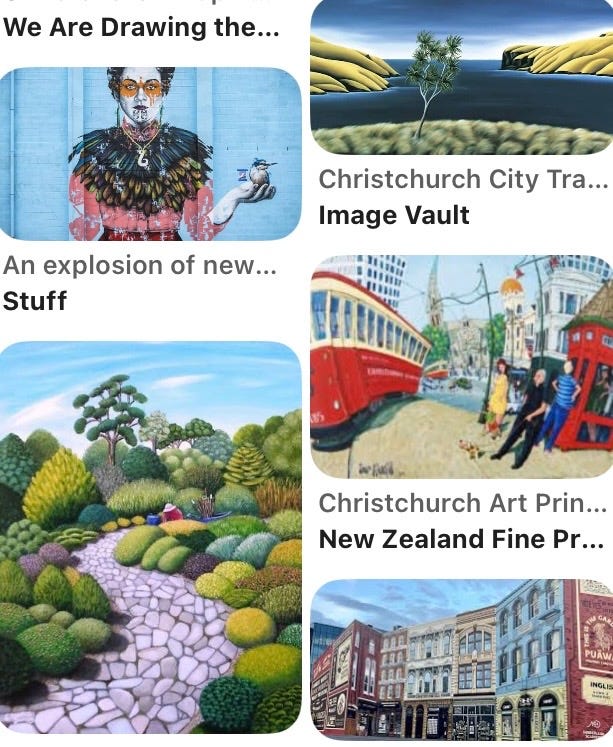
Christchurch isn’t the same city I arrived in as a ten-year-old. The earthquakes forced a kind of rebirth; whole blocks were erased, all the pipes had to be torn up and replaced, old buildings taken down brick by brick, and for years, the city was just one endless swarm of orange road cones. It became a kind of personality trait; some would even put flowers in the holes at the top of the cones, turning them into vases. There were roadworks for years, and we would get lost in endless detours. But slowly, the rebuild grew from the rubble, and new roads and motorways have improved it. A new hospital, new bold architecture that seems determined to offer beauty wherever the old beauty was broken. We’ve got a gondola again, a zipline, and endless walking tracks. A huge art scene lives here too, and the old tramway got a revamp. Hamner hot pools are just up the road. A brand-new stadium has risen; it’s nearly ready for international sports to be held here again, after 15 years of nothing, since the old one was condemned. A global pool complex too that took so long to finish practically deserves its own citizenship.
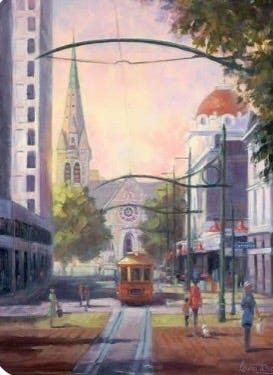
Christchurch is like a city that decided if it was going to start over, it might as well reinvent its whole vibe while it was at it. It’s different now, lighter, braver, more experimental, and it’s now a good base for exploring the rest of the South Island if you come here as a tourist. You can get anywhere from here: Mountains, lakes, coastlines, towns that feel like time forgot them, all within reach. Sometimes I think that’s why so many people come here to start over. Honestly, a lot of people are making the move; immigration’s rising here because our population is in decline, like most. We bring in loads of builders and workers from all over, including some from countries in conflict, as well as students from every corner of the world. People come here because they want safety, or work, or a future, or simply a chance to breathe somewhere new. There are many ways into New Zealand, one of them, hilariously, is having a million dollars in spare change; the rest are more realistic, more human. I wrote a whole post about it a few months back for some Americans who were ready to jump the fence and start over somewhere far from American politics. I’ll link that below for anyone considering it.
New Zealand isn’t perfect, no country is, but it’s a place trying to hold itself together with some dignity, and Christchurch in particular has taught me what it means to stay, to rebuild, to choose your land even when it shakes you, even when it tries to fold you into its fault lines. Maybe that’s why I’m finally writing about it now. Perhaps I needed to lie on the grass today, under this tree, hearing the city’s breath beneath me, before I could tell its story properly.
I’m also writing this because I want to know where you live, too. I think about the seven hundred of you scattered across the world like seeds I can’t see but still feel connected to somehow. I want to hear what rests beneath your cities and your small towns, what your histories sound like when you press your ear to the ground. A whole chorus of memories has risen like aftershocks today. But for now, I just wanted to place you beside me on the grass, under this tree, in this city that keeps breaking and rebuilding and teaching me how to do the same.
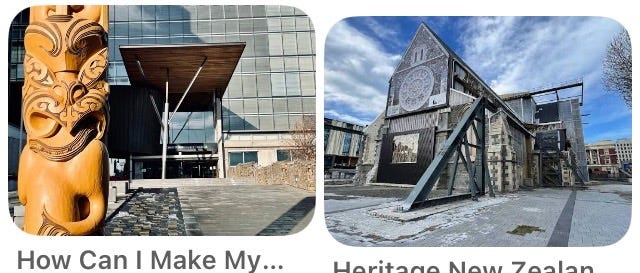
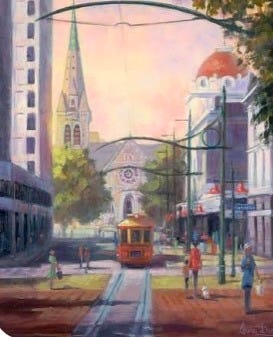
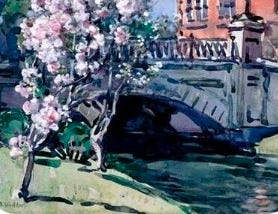
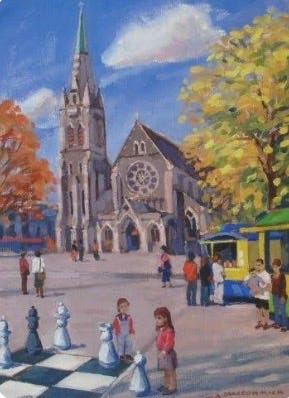
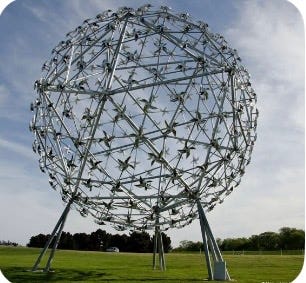
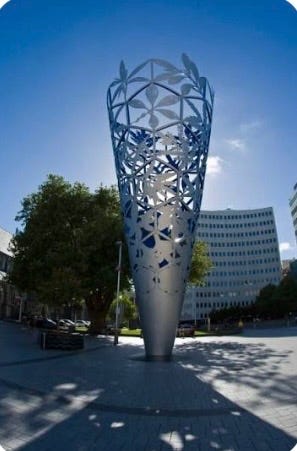
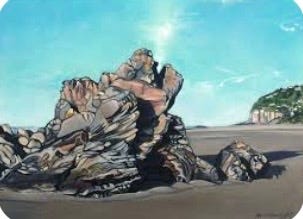
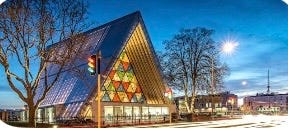
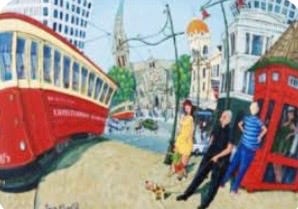
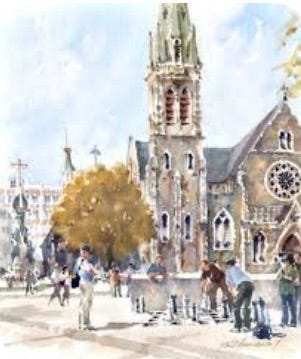
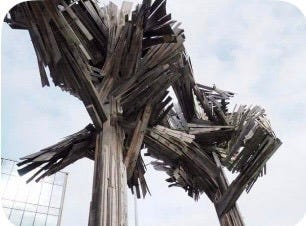
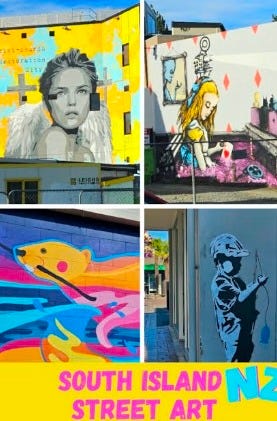
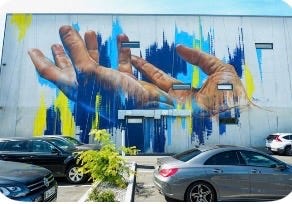
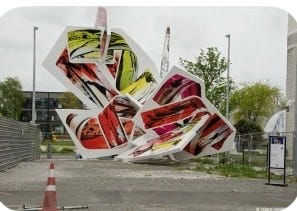
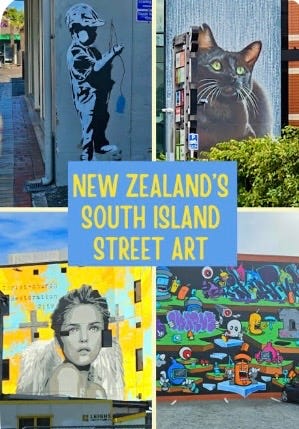
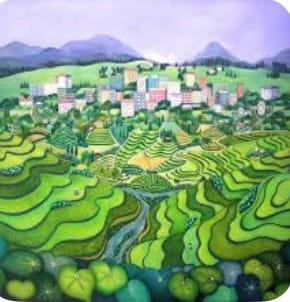
Above is outside the new art centre, and an unfixed church (we had many unfixed churches, and many were demolished since the quakes), too expensive to rebuild. I hope you enjoyed all the art popped between sections, created mainly by Christchurch artists.
TELL ME ABOUT YOUR LAND
If you felt something reading this, tell me about where you live.
What land shaped you?
What has cracked you open, and what has held you after?
I’d love to read your stories too.
If you would like to support me in my writing, I appreciate your love and support. You can shout me a coffee here.
Franky, this is one of the most moving and generous pieces of writing I’ve read in a long time. You don’t just tell a story — you breathe life into the land itself, letting us feel the weight of history, the tremors of loss, and the quiet power of rebuilding from the ground up. The way you hold space for both rupture and resilience is stunning. I felt your words in my body — the grief, the upheaval, the cracked-open tenderness of starting again.
Your story reminded me how places shape us, not just in their beauty or hardship, but in the ways they invite us to become more fully ourselves. Thank you for sharing this intimate map of survival and belonging — and for inviting us to press our ears to the ground of our own lives.
This is so beautiful. I was reminded while I read it of how I often have an image in my head of what life is supposed to be like. Often from sitcoms or social media posts where everyone posts the very best version of themselves. But that isn't real life. The story that got me to who I am today, that is real life. Thank you for your vulnerability. I always learn so much from it.